What Is Assignment? What Happens When You Get Assigned
By The Pie , independent options and small-cap research
Published
The Pie is the Nickelpie research desk, not a licensed financial adviser. Nickelpie publishes educational analysis, not personalized investment advice.
Assignment is when the option you sold is exercised and your promise comes due. A put assigned makes you buy 100 shares at the strike; a call assigned makes you sell your 100 shares at the strike. It happens automatically when an option finishes in the money, and occasionally early. On the wheel, assignment is a planned step, not a failure.
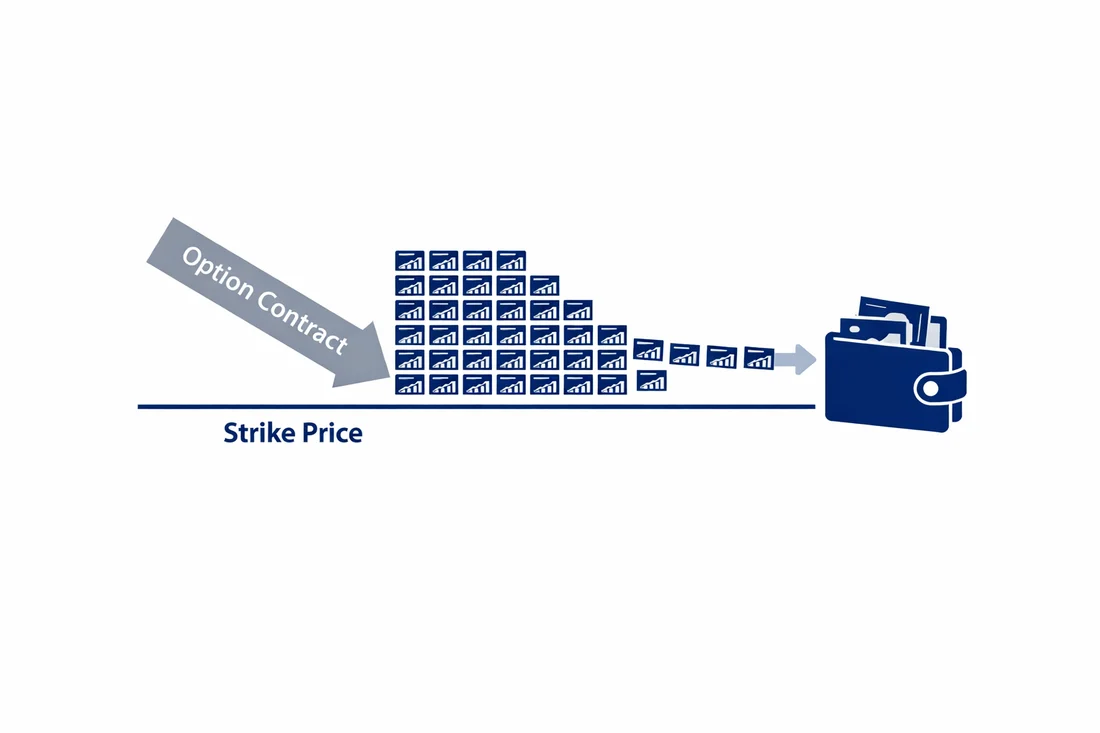
The word beginners fear, explained plainly
"Assignment" sounds like something going wrong. It isn't. When you sell an option, you make a promise and get paid for it. Assignment is simply the moment the person on the other side decides to hold you to that promise.
- Assigned on a put → you buy 100 shares at your strike. You wanted the stock; now you own it.
- Assigned on a call → you sell your 100 shares at your strike. You agreed to sell there; now you have.
You keep the premium either way. Nothing about assignment takes back the cash you were paid.
When does it happen?
Two moments. The first is the common one; the second is the one worth knowing about.
At expiration, if the option is in the money
In the US, the Options Clearing Corporation automatically exercises any option that expires at least $0.01 in the money. Sell a $20 put and XYZ closes expiration Friday at $19.90? You'll wake up Saturday owning 100 shares. It happens for you, there is no button to press.
Early, before expiration (uncommon, but real)
US stock options are American-style, so they can be exercised any trading day. The most common early-assignment trigger is a covered call that's in the money just before the stock goes ex-dividend, the call owner exercises early to capture the dividend, and your shares are called away a day or two ahead of plan. Early assignment is most likely when an option is deep in the money with little time value left. It rarely hurts on the wheel, but it's why you watch ex-dividend dates when your call is in the money.
What to do the day after you're assigned
If your put was assigned (you now own the shares)
You own 100 shares at your strike, and your cost basis is the strike minus the premium you collected. A $20 put with a $60 premium means a basis of $19.40. From here, the wheel continues: sell a covered call at a strike above $19.40 and collect more premium while you hold. Do not panic-sell the shares the moment they land, assignment was the plan, and the plan has a next step.
If your call was assigned (your shares were sold)
Your 100 shares sold at the strike. You keep the premium and every dollar of gain up to the strike, and you're back to cash. That's a completed wheel turn, a win. The next move is to sell a new cash-secured put, on the same stock or a different one you'd be happy to own, and start the loop again.
The mindset that actually matters
Most new sellers spend enormous energy trying to avoid assignment, rolling endlessly, closing early, treating every in-the-money option as an emergency. On the wheel, that's backwards. Assignment is how the strategy makes money. You get paid to buy stocks you want at prices you like, and paid again to sell them at prices you like.
The only assignment that genuinely hurts is being handed 100 shares of something you never actually wanted to own. That is not a mechanical problem you can roll or hedge your way out of. It's decided before you sell the put, in the single question that governs this entire strategy: would I be content to own this stock, at this price, for a long time? If yes, assignment is just Tuesday. If no, don't sell the put.
Common questions
What does it mean to be assigned on an option?
Assignment is your promise coming due. When the option you sold is exercised, you have to do the thing you were paid to agree to.
- Sold a cash-secured put? You buy 100 shares at the strike.
- Sold a covered call? You sell your 100 shares at the strike.
Either way you keep the premium. Assignment isn't a penalty or a glitch, it's the option doing precisely what you were paid to promise.
Does assignment happen automatically at expiration?
Yes, if the option is in the money at expiration. The Options Clearing Corporation automatically exercises any option that finishes at least $0.01 in the money, which assigns the seller. Finish out of the money and the option expires worthless, you keep the premium, no assignment, nothing to do. It is handled for you overnight on expiration Friday.
Can I be assigned early, before expiration?
Yes. US-listed stock options are American-style, meaning they can be exercised any trading day, so assignment can land early. It isn't common, but it happens.
The classic trigger is a covered call that's in the money right before the stock goes ex-dividend. The person who owns your call exercises early to grab the dividend, and your shares get called away a day or two ahead of schedule. Early assignment is most likely when an option is deep in the money with almost no time value left. On the wheel it's rarely harmful, just keep an eye on ex-dividend dates when your call is in the money.
What should I do after being assigned on a cash-secured put?
You own 100 shares now, at a cost basis of the strike minus your premium. Sold a $20 put and collected $60? Your basis is $19.40.
If you still want the stock, start selling covered calls above your cost basis, the second half of the wheel. If your reason for owning it has genuinely changed, decide to hold or exit on the merits. The one thing not to do is sell calls below your cost basis just to collect premium, that locks in a loss if you're called away.
Is getting assigned a bad thing?
No, on the wheel, assignment is the mechanism, not the failure. A put assigned means you bought a stock you wanted at a price you chose. A call assigned means you sold at a profit and finished a cycle. Both are the strategy working.
Assignment only stings when you sold a put on a stock you didn't truly want to own. That's not an assignment problem, it's a stock-selection problem, and it's exactly why "only wheel stocks you genuinely want to own" is the first rule.
Are there fees for assignment or exercise?
It depends on the broker. Several charge nothing, SoFi, for example, explicitly removed exercise and assignment fees, and the other $0-contract brokers are similar. Some brokers historically charged a small assignment fee. Since the wheel gets you assigned regularly by design, a broker with no assignment fee quietly removes a recurring cost. See our broker comparison.
Keep going
- The wheel strategy, end to end
- Selling cash-secured puts
- Selling covered calls
- How and when to roll an option
Before trading options, read the OCC's Characteristics and Risks of Standardized Options. This article is educational analysis, not investment advice.